

“Dallas-Based Designer Creates Costumes for Beyonce's ‘Black Is King' - NBC 5 Dallas-Fort Worth” plus 2 more |
- Dallas-Based Designer Creates Costumes for Beyonce's ‘Black Is King' - NBC 5 Dallas-Fort Worth
- Beyonce’s hairstylist discusses ‘Black is King’, the ‘hairspiration’ and those 30-foot braids - Yahoo Sports
- Robin Thede Wore a Beyoncé Hoodie for Emmy Luck, Obviously - Vulture
| Posted: 20 Aug 2020 08:07 AM PDT A Dallas-based designer was featured on the national stage recently. Venny Etienne, the designer of Levenity fashion line, was one of the designers handpicked to design clothes for Beyoncé's visual album "Black Is King" on Disney Plus. "There is nothing else to do but to be completely in shock in that moment when I got the call. I think at that time, I hired on two interns here locally that same week. I told them that they had to sign a contract because we were about to dress a client. They looked at me and were like 'Well who is it, Beyoncé?!' and I said just finish signing the contract," Etienne explained. Beyoncé is seen in the 85-minute film wearing dozens of costumes and Etienne's journey to being one of the designers started years ago. 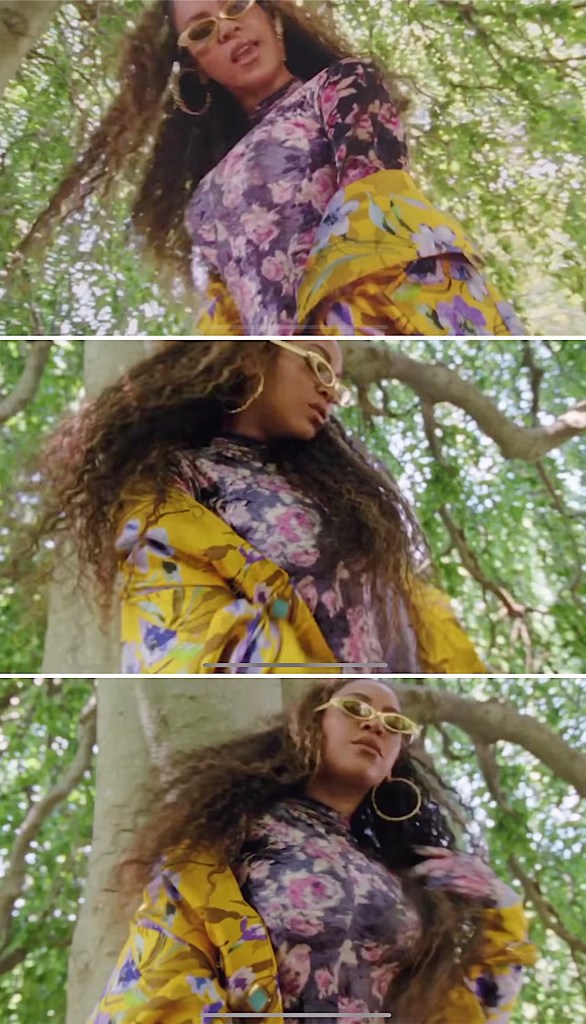 Courtesy Venny Etienne "One of the things that I always loved to focus on is just networking with finding out who your team is. Like social media is such a great tool to get to know who people are surrounded by, who their stylists are. Who is their makeup artist? I just reached out through Instagram to shoot my look book over and this was like four years ago. We have been inching on in and finally, that moment came," Etienne said. Etienne is no stranger to the spotlight. He's been in the fashion industry in the last 12 years and finished in the top seven of Bravo's Project Runway's most recent season. In his case, persistence paid off and that is the advice he gives anyone who is trying to make their dreams come true. Especially for people of color who have felt like their hard work has gone unnoticed for so long. "I would say just to keep going. I believe that the moment we are in right now is really shining our designers of color and Black creatives and its moments like this where Beyoncé helps people like us have a voice. It is giving me the opportunity to do the same for others. So I just feel like we need to support each other and be there for one another in terms of supporting businesses. There are so many different things the Black community can do, We just don't have that platform, but now it's starting to happen," Etienne said. |
| Posted: 20 Aug 2020 09:00 AM PDT Our team is dedicated to finding and telling you more about the products and deals we love. If you love them too and decide to purchase through the links below, we may receive a commission. Pricing and availability are subject to change. Anticipation for the Beyonce-produced visual album "Black is King" was real — and expectations for the film were entirely exceeded. But out of all the magic in this Disney Plus production, the "Black is King" hairstyles were truly something to witness. "Of course Beyonce was at the helm of it — which is a different type of project altogether," Kim Kimble, hairstylist for "Black is King," tells In The Know. Kimble explains how the looks behind "Black is King" were "more visual and designed for more of a visual album" than her previous work as a hair artist for Ava Duvernay's "A Wrinkle in Time." "It's even more fantasy than 'A Wrinkle in Time,' if that's possible," Kimble says. Beyonce's 30 foot braids, thoughSome of the instantly-iconic "Black is King" hairstyles Kimble created for the film included the double-braided style in the 'Spirit' video, as well as those astonishing 30 foot-long braids in the 'Water' video featuring Salatiel and Pharell. And yes, that was a personal request from Queen Bey herself. "I never had that request before. It was a surprise, but we've done a lot of interesting things," Kimble says about the wildly long braids, which is actually a wig that took three days and six braiders to make. "But I was also doing other things," she explains. Kimble says she had an entire team of stylists who were simultaneously working on the braided wig as well as the hair for Beyonce and the dancers for the 'Spirit' video. According to Kim, 'Spirit' would have originally featured the 30-foot braided wig, which arguably may have gotten the masterpiece more air time in the film. Ultimately though, the wig made its grand appearance for a split second towards the end of the video for 'Water.' With her team, Kimble also produced the braided hairstyle Beyonce wears in the bright greenish-yellow highlighter dress during the 'Spirit' dance number. Kimble says the look was inspired by a tribe in Chad, where the women had "really long and intricate little braids."  Credit: YouTube "African hair and beauty is so unique, but it's so colorful and very creative and very vibrant," Kimble explains. "That was one of the things I was really excited about for this project, that I get to work in this creative capacity, because I know African influence is out there and so that was probably one of the most exciting parts about it." How to recreate these Black is King hairstylesFor the Black is King hairstyles, Kimble was primarily working on textured and curly hair. She explains that "there was no really straight hair" on set. Kimble's own line of Kim Kimble products, however, came in clutch for every head of hair that came through. "We used pomade for braiding hair, shine spray because we're dealing with curly hair, as well as shampoos, conditioners, curl cream and baby hair pomade for the edges of the braids," Kimble says. "There was tons of leave-in [conditioner] because of the curly braids." Take a peek at some of Kimble's product line that she used on set that will help you slay your natural hair game. |
| Robin Thede Wore a Beyoncé Hoodie for Emmy Luck, Obviously - Vulture Posted: 20 Aug 2020 08:25 AM PDT  Robin Thede. Photo: Leon Bennett/Getty Images for ESSENCE A Black Lady Sketch Show is the first variety sketch series written, directed, and performed by a core cast of Black women. As of last month, it's also the first show of its kind to be nominated for three Emmy Awards, including one for Outstanding Variety Sketch Series. Robin Thede, the creator and star of A Black Lady Sketch Show, who previously hosted BET's The Rundown With Robin Thede and served as head writer on The Nightly Show With Larry Wilmore, recently got on the phone with Vulture to talk about the thrill of being nominated and the status of Black Lady Sketch Show season two. Thede also discussed the prescience of the quarantine interstitials that ran throughout season one, segments that now play like a sneak preview of pandemic life; the hidden significance of a sketch that aired last season, something she's never acknowledged until now; and her feelings about the Black Lives Matter movement and the greater number of Black Emmy nominees this year. Congratulations on your Emmy nominations. I know it's a cliché to ask what you were doing when you found out you were nominated, but what were you doing? I believe you were supposed to be starting production on the second season when the pandemic shut everything down. Is that right? Do you have a sense of when you might be able to start? Can you say? I know other productions have been shooting without incident, so that's encouraging. I want to shoot as soon as possible, but we have to do it so safely. So I hope that people understand — not just mine; a lot of our favorite TV shows will not be back when you expect them. Have you changed anything in the scripts or did you just leave them as they were? I think there are some things we'll adjust, but the good thing is, our show is written to be evergreen. I could make literally the show we made last season a year from now. It would still be relevant and nothing would feel dated. Thank God I don't have that pressure that SNL has to have to poke fun of things in real time. I do think that some things will need to be adjusted, mostly because whenever anyone shoots within the next, at least, year, I'm assuming that there are going to be COVID protocols in place. Even if we shoot in that time frame, you're not going to be able to have 200 extras on-set or kids and animals and kind of specialty things. We're definitely looking at that and looking at how things need to adjust to be able to shoot in the new normal of production. You mentioned the quarantine interstitials from last season. I believe you've said those are going to continue, because they ended on a cliffhanger with the doorbell ringing. I know everybody makes a big thing of that series of sketches being relevant. But I think the threesome sketch, where Ashley Nicole Black's character wants her partners to wear medical masks and use hand sanitizer, may be even more relevant. I'm like, That's just how we do it now. That's not even a joke. Oh, really? We at Vulture recently published a piece about your Seth Meyers interview, with the headline "Our Future Depends on Listening to Robin Thede." I think this might be correct. Is it gratifying or frustrating that you've been saying this stuff for such a long time and society is just now catching up? I say that to say I don't feel any kind of way. I feel glad that people are rediscovering or discovering not only the sketch show but also The Rundown, things I said on The Nightly Show. I mean, I've been saying this stuff for a decade at least. I think it's fine. I think information has to meet people where they are. I think the reason why Black Lives Matter finally settled in with people and is now being more understood and accepted is because time had to catch up. In 2014 and 2015, and when Trayvon Martin was killed and Ferguson happened and then Mike Brown, all these series of events weren't enough to turn the table for America. Time and space and, I guess, enough tragedy had to happen, and for people to be home and have the time to listen and care. I don't think anyone's mad that they're listening now, that the country and the world in larger numbers is listening now. I think the time for progress is always now. Black Lives Matter is resonating more now and, as you said, some of it is because of the pandemic and people having more time to reflect and pay attention to what's going on. Do you feel like there was something different about the George Floyd case, as well? I think some people don't believe it unless they see it. They always think, "Well, what were they doing?" There's always that "he was no angel" defense. Look, me watching George Floyd's death was just as heartbreaking as watching any of the others. So I'm not going to sit here and say, "Oh, yeah, the way he died made him the perfect martyr." I've tweeted this before, too, but if you have to think about, "Well, what did he do?" when you see that someone was murdered by the police, that's inherent prejudice. It's inherent racism. You really have to examine that, because you don't think that about non-Black people. We don't think that about non-brown people. And I think that's what systemic racism is. Being racist — it doesn't mean you're in the KKK. That's what I keep trying to explain. Being racist is just acknowledging that you have prejudice and bias towards people of a different color and that those are things you have to pay attention to when you're making decisions in your life. I think people look at it as a slur — someone saying you're racist — which I get, because there's a spectrum, right? There are people who are in out-and-out hate groups, and then there are people who won't hire somebody based on their name. Or based on their application, won't even interview them. All of it's racism, though. And all of it has to be tanked. In a frivolous way, in the entertainment industry, everyone's calling this the Blackest Emmys ever, which it is just numbers-wise. But you look at the shows that are nominated: Watchmen, Insecure, Little Fires Everywhere, our show. These are shows that are rivaling all of the other shows that are amazing, that we're up against. No one is getting a pity Emmy nomination. These are incredible shows that deserve to be recognized, and it's about time. And if you think about it, I think we're just becoming more visible. There have been good shows with Black people on them for so long, and they just are overlooked and not thought about. I think what happened this year is that people had more time to watch, but they also felt more inclined to watch, because I think they were feeling like, I need to do better. So I'm glad. I'm glad that that work is being recognized. The Emmys feel very silly compared to the death of George Floyd. But it all has to do with the shift in our country in terms of Black people being seen. Sometimes people talk about awards as being unimportant, but for the reasons you're saying, I think they can be important, especially when you're talking about representation. That demonstrates to people that not only are these shows important, but it gives other creative people something to aspire to. |
| You are subscribed to email updates from "beyonce outfits,beyonce phone,beyonce phone number" - Google News. To stop receiving these emails, you may unsubscribe now. | Email delivery powered by Google |
| Google, 1600 Amphitheatre Parkway, Mountain View, CA 94043, United States | |







0 Yorumlar